1994 Toyota Supra Automatic: Specs, Performance & Value Guide
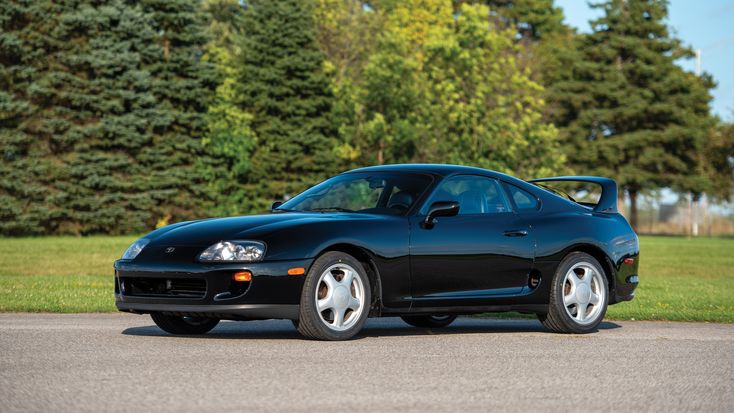
The 1994 Toyota Supra automatic represents a pivotal moment in the lineage of one of automotive history's most iconic sports cars. While the twin-turbo 2JZ-GTE engine is the legendary heart of the A80 platform, the automatic transmission option provided a unique blend of daily usability and raw performance. This specific model year, often considered the peak of the naturally aspirated and early turbo era, continues to attract enthusiasts who appreciate the balance of technology, reliability, and the driver-focused experience the Supra offers, even in its more civilized guise.
The Engineering Legacy of the A80 Platform
To understand the 1994 Toyota Supra automatic, one must first appreciate the chassis upon which it sits. The A80 generation, produced from 1993 to 2002, is a quantum leap over its predecessor, the A70. It is built on a near-monocoque chassis that provides unprecedented rigidity and handling precision. The suspension geometry, featuring an independent double wishbone setup at both ends, was meticulously engineered to deliver a perfect balance between high-speed stability and responsive cornering. This robust foundation is what allows the Supra, whether equipped with a manual or an automatic, to perform with such grace and authority on any road.
The 7M-GTE Engine: Power and Precision
The defining feature of the 1994 Supra is unquestionably its powertrain. The automatic variants were typically equipped with the 7M-GTE, a 3.0-liter inline-six turbocharged engine. This unit produced 232 horsepower and an impressive 276 lb-ft of torque, numbers that were competitive in the mid-90s and remain respectable today. The 7M-GTE is celebrated for its smooth power delivery, linear throttle response, and a distinct exhaust note that resonates with a mechanical purity. When paired with the Aisin-Warner automatic transmission, the result is a driving experience that is both exhilarating and accessible, allowing the driver to focus on the road ahead without the need for clutch pedal management.


The Automatic Transmission Experience
One of the most common questions surrounding the 1994 Supra automatic is how it performs compared to its manual counterpart. The Aisin-Warner 4-speed automatic was a sophisticated unit for its time, featuring close-ratio gearing and a responsive torque converter. Shifts are firm but not harsh, and the transmission is adept at delivering power to the rear wheels with efficiency. While some purists argue that a manual is essential for ultimate control, the automatic setup offers significant advantages in stop-and-go traffic and for drivers who prefer a more relaxed commute without sacrificing the Supra's thrilling performance envelope.
Interior Comfort and Daily Usability
Beyond the mechanics, the 1994 Supra automatic shines in its ability to function as a practical daily driver. The cabin is a sanctuary of driver-focused ergonomics, with a minimalist yet functional dashboard dominated by a large tachometer. The seats, while supportive and comfortable for long drives, provide ample lateral support during aggressive cornering. The trunk space is generous, and the rear seats, while not spacious, are usable for short trips. This blend of performance and comfort is a primary reason why the Supra automatic remains a sought-after classic for enthusiasts who refuse to compromise on either excitement or convenience.


Maintenance and Reliability Considerations
Owning a 1994 Toyota Supra automatic comes with a unique set of responsibilities, primarily centered around proactive maintenance. These vehicles are now over 30 years old, and while Toyotas are known for their durability, specific components require attention. The most critical area is the rear main seal, which can develop leaks over time. Additionally, the automatic transmission fluid and filter should be serviced regularly using the correct Toyota Type III fluid. Cooling system integrity is also paramount, as the 7M-GTE is known to generate significant heat. With proper care, these machines can provide years of reliable service and countless miles of driving enjoyment.
Market Value and Collector Appeal
The market for the 1994 Toyota Supra automatic has remained strong, driven by the car's enduring popularity and cultural significance. Values have steadily appreciated over the past decade, reflecting its status as a modern classic. Condition is, of course, the ultimate determinant of price, but examples in good mechanical shape with documented service histories command a premium. For collectors and investors, the automatic variant represents a smart entry point into the Supra market, offering a compelling combination of performance, comfort, and long-term value appreciation that rivals many newer exotic cars.
In the end, the 1994 Toyota Supra automatic is more than just a car; it is a statement. It is a testament to an era when automotive engineering prioritized driver engagement and mechanical honesty. For those fortunate enough to experience the surge of power from the inline-six and the precision of the steering rack, the memory of that automatic transmission becomes not a compromise, but a distinct and cherished characteristic of an already legendary machine.




Related Articles
1996 Toyota Supra Automatic: Specs, Performance & Reliability Guide
The 1996 Toyota Supra automatic represents the final evolution of the legendary fourth-generation (A70) platform, offering a blend of brute force and daily...

1994 Toyota Supra MK4 A80: The Ultimate Guide to Specs, Performance & Mods
The 1994 Toyota Supra MK4 A80 represents the pinnacle of naturally aspirated sports car engineering, a machine that has only grown in desirability since its...

2025 Toyota Supra Curb Weight: Specs, Details & Performance Guide
When discussing the 2025 Toyota Supra, the topic of curb weight is more than just a number on a spec sheet; it is a fundamental factor that dictates the sports...

2017 Toyota 86 Automatic: The Ultimate Guide to Specs, Performance & Handling
The 2017 Toyota 86 automatic represents a significant evolution for Subaru’s iconic flat-four sports car, bringing enhanced accessibility without sacrificing...

1994 Toyota Celica GT4 Engine Specs: Complete Guide & Performance Details
The 1994 Toyota Celica GT4 represents the pinnacle of the fourth-generation Celica lineup, specifically engineered for enthusiasts who demanded precision...

1994 Toyota Supra MK IV Engine: Ultimate Power & Performance Guide
The heart of the revered 1994 Toyota Supra MK IV lies beneath its sculpted hood, a 3.0-liter twin-turbocharged inline-six engine known as the 2JZ-GTE. This...