2016 Hyundai Dashboard Symbols: Meanings & Warning Lights Explained
Understanding the 2016 Hyundai dashboard symbols is essential for every driver, as these visual alerts are your vehicle's primary method of communicating its operational status. While a quick glance might show everything is normal, a sudden icon can indicate anything from a simple loose fuel cap to a critical engine malfunction. This guide cuts through the confusion, translating the cryptic graphics on your 2016 Hyundai’s instrument cluster into clear, actionable information. By familiarizing yourself with these 2016 Hyundai dashboard symbols and meanings, you can respond appropriately, ensuring both your safety and the longevity of your vehicle.
Common Warning Lights You Should Recognize
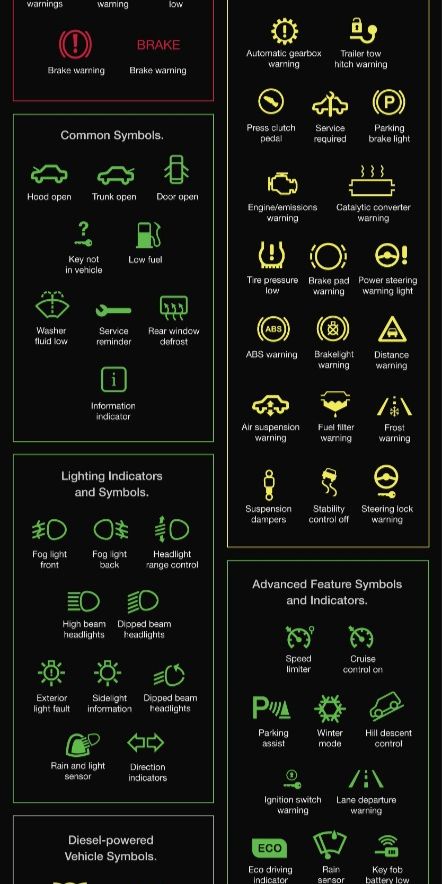
The most universally recognized symbol is the red or orange engine warning light, often resembling a blocky car engine. On a 2016 Hyundai, this light indicates a problem with the powertrain or emissions system, which could range from a loose gas cap to a serious engine misfire. Another frequently encountered icon is the brake system alert, which looks like a circle with an exclamation point and the letters "P" and "B" inside. If this appears, it could signify low brake fluid, a stuck parking brake, or a failure in the anti-lock braking system (ABS), all of which require immediate attention for safe driving.
Battery and Charging System Alerts
Perhaps one of the most misunderstood 2016 Hyundai dashboard symbols is the battery icon, depicted as a rectangle with a plus and minus sign. When this illuminates, it does not mean the battery is dead, but rather that the charging system is failing. This could be due to a loose alternator belt or a faulty alternator. Ignoring this light will eventually lead to a drained battery and a vehicle that will not start, so pulling over safely to inspect the issue is highly recommended.


Safety and Stability Indicators
Modern 2016 Hyundai models come equipped with advanced stability controls, and their corresponding dashboard symbols are crucial for understanding traction. The stability control light usually looks like a car with wavy lines behind it. This often flashes when the system is actively correcting your steering to prevent skids. If the light stays on, it means the stability control system is turned off, which can make the vehicle feel slippery in adverse weather conditions and should be reset by pressing the designated button on the dashboard.
Tire pressure monitoring systems (TPMS) are standard on most trims, represented by a yellow exclamation point inside a horseshoe shape. If this light stays illuminated, one or more tires are significantly underinflated, which can lead to poor fuel economy, uneven wear, or even a blowout. Checking your tire pressure with a gauge and inflating them to the PSI recommended on the driver’s door jamb is the standard procedure for resolving this specific 2016 Hyundai dashboard symbol.


Oil, Coolant, and Other Vital Signs
The oil pressure light is one of the most critical 2016 Hyundai dashboard symbols to heed, as it signals a drop in engine lubrication. Usually depicted as an oil can, this light requires you to stop the vehicle immediately and turn off the engine to prevent catastrophic engine damage. Similarly, the coolant temperature light, which looks like a thermometer dipped in water, warns of engine overheating. If this appears, you should pull over safely as soon as possible and turn off the engine to allow it to cool down before investigating the cause.
Lastly, the high beam indicator is a simple but important symbol that looks like a series of wavy lines with a line through the top of the headlights. It reminds you that your high beams are currently active, which is vital for night safety to avoid blinding oncoming drivers. Finally, the front airbag symbol, which is a seated figure with a circle in front of the chest, will illuminate briefly at startup but should turn off. If it remains on, it indicates a fault in the supplemental restraint system, meaning the airbags may not deploy in a collision.


Related Articles
2021 Hyundai Palisade Dashboard Symbols: Meanings & Warning Lights Explained
Driving a 2021 Hyundai Palisade offers a sense of confidence, thanks to its modern technology and refined safety suite. However, understanding the language of...
2022 Hyundai Santa Fe Dashboard Symbols: Meanings & Warning Lights Explained
Understanding the language of your Hyundai Santa Fe is essential for safe and confident driving. The 2022 model year comes packed with advanced technology and...
2020 Hyundai Tucson Dashboard Symbols: Meanings & Warning Lights Explained
Understanding the 2020 Hyundai Tucson dashboard symbols is essential for responsible vehicle ownership. The digital cluster and central display provide a...
2023 Hyundai Palisade Dashboard Symbols: Meanings & Warning Lights Explained
Understanding the 2023 Hyundai Palisade dashboard symbols is essential for every owner who wants to ensure their family hauler remains in optimal condition...
BMW IX Dashboard Symbols: Meanings & Warning Lights Explained (2024)
Understanding the BMW iX dashboard symbols is essential for every owner of this cutting-edge electric SUV. The minimalist interior design extends to the...

Toyota Corolla Dashboard Symbols: Meanings & Warning Lights Explained
Understanding the dashboard symbols of your Toyota Corolla is essential for responsible vehicle ownership. The warning lights and indicators on your instrument...