Early 2000s Toyota Truck: Reliable Rugged Models & Reviews
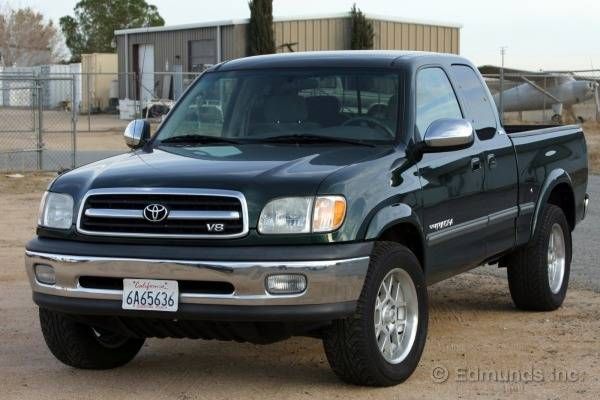
The early 2000s Toyota truck represents a specific moment in automotive history where durability, capability, and straightforward mechanics converged. This era, roughly spanning from 2000 to 2004, captures the Hilux in its final generation before a significant redesign and the Tundra in its initial years as Toyota's bold entry into the full-size American market. These trucks are remembered for their robust diesel engines, particularly the legendary 1KZ-TE turbocharged diesel, and a no-nonsense approach to design that prioritized function over the emerging trends of excessive chrome and interior luxury. Owning one during this period meant owning a tool that was expected to work relentlessly, whether navigating harsh commutes or tackling weekend projects far from paved roads.
When looking back at the early 2000s Toyota truck lineup, the Hilux remains the global icon of reliability. While the North American market received the Tacoma, which occupied a slightly smaller segment, the Hilux was the workhorse that defined the brand’s global reputation. This generation of the Hilux moved away from the square headlights of its predecessor, adopting a more modern, rounded aesthetic while retaining the rugged underpinnings that made it famous. The focus was squarely on longevity, with owners frequently reporting vehicles exceeding 300,000 miles with only routine maintenance, a testament to the engineering philosophy of the time.
Performance and Engineering Highlights
The Diesel Powerhouse: 1KZ-TE Engine
The heart of the early 2000s Toyota Hilux was the 1KZ-TE turbocharged diesel engine, a unit revered for its torque, efficiency, and mechanical simplicity. Producing around 98 kW (131 hp) and 325 Nm of torque, this engine provided the perfect balance of power for on-road driving and off-road exploration. Unlike modern engines laden with complex emissions systems, the 1KZ-TE was robust and relatively straightforward to repair, making it a favorite among mechanics and DIY enthusiasts in regions where parts were readily available. Its durability was a core part of the Toyota DNA, designed to run for decades with basic care.


Capabilities and Towing
Despite its utilitarian nature, the early 2000s Toyota truck did not skimp on capability. The Hilux offered impressive towing capacities for its class, often rated to tow over 2,000 kg when properly equipped. This made it suitable for hauling boats, small trailers, or heavy equipment, appealing to both tradespeople and adventure seekers. The four-wheel-drive systems were generally reliable, featuring manual locking hubs and straightforward center differential locks, giving drivers direct control over how power was distributed to the wheels. This engagement fostered a connection between driver and machine that is often lost in today's fully automated four-wheel-drive systems.
Interior and Design Philosophy
The interior of an early 2000s Toyota truck was a study in function over form. Materials were utilitarian, with hard plastics covering the dashboard and doors, and fabric seats that were supportive but far from plush. However, this lack of luxury was not a drawback; it was a conscious design choice to keep the vehicle affordable to produce and maintain. The controls were logical and within easy reach, and the lack of distracting infotainment systems meant the driver remained focused on the road and the task at hand. This raw, tactile driving experience is often cited by enthusiasts as a major reason why these trucks feel more connected to drive than many modern vehicles.


Market Context and Legacy
In the early 2000s, the truck market was undergoing a subtle shift. American full-size competitors like the Ford Ranger and Chevy S-10 were becoming more refined and car-like, while Japanese rivals were pushing boundaries with technology. Toyota held its ground with a philosophy centered on bulletproof reliability and resale value. The trucks from this era have largely avoided the steep depreciation seen by many vehicles, largely due to their proven longevity. As a result, finding a well-maintained early 2000s Toyota truck today is often a testament to the care it received, and these vehicles frequently command respect from younger generations who value mechanical authenticity.
For the buyer considering a used Toyota truck from this period, the appeal lies in the promise of simplicity. There are no complex computer systems to fail, and replacement parts are generally abundant and affordable. Whether sourced from a scrapyard or a private seller, these trucks offer an entry point into vehicle ownership that is both affordable and rewarding. They serve as a reliable daily driver, a project for restoration, or a dependable companion for a weekend getaway, proving that the definition of a perfect truck is often found not in its features, but in its unwavering ability to perform when called upon.




Related Articles

Early 2000s Toyota Land Cruiser For Sale: Rugged Reliable Deals
The early 2000s Toyota Land Cruiser remains one of the most desirable used SUVs on the market, striking a rare balance of rugged off-road capability and...
Early 2000s Toyota Car Models: Reliable Rides & Nostalgic Classics
The early 2000s represented a golden era for Toyota, a period defined by reliable engineering, burgeoning technological integration, and a lineup that catered...

Early 90s Toyota Truck: Reliable Rugged Classics & Buying Guide
The early 90s Toyota truck represents a golden era for pickup enthusiasts, encapsulating a time of rugged reliability and straightforward mechanics. Models...
Toyota Trucks Early 2000s: Legendary Models & Reviews
The early 2000s marked a pivotal and transformative era for Toyota trucks, solidifying their reputation for durability and innovation in the competitive...

Toyota Garbage Truck: Top Models, Prices & Reviews
For municipalities, waste management contractors, and industrial facilities, the Toyota garbage truck represents a benchmark in reliability, efficiency, and...

Toyota SUV Models Early 2000s: Complete Guide
The Toyota SUV lineup of the early 2000s represented a pivotal moment for the brand, bridging the gap between rugged utility and mainstream family...