BMW vs Benz: Which Faster Car Wins the Race?
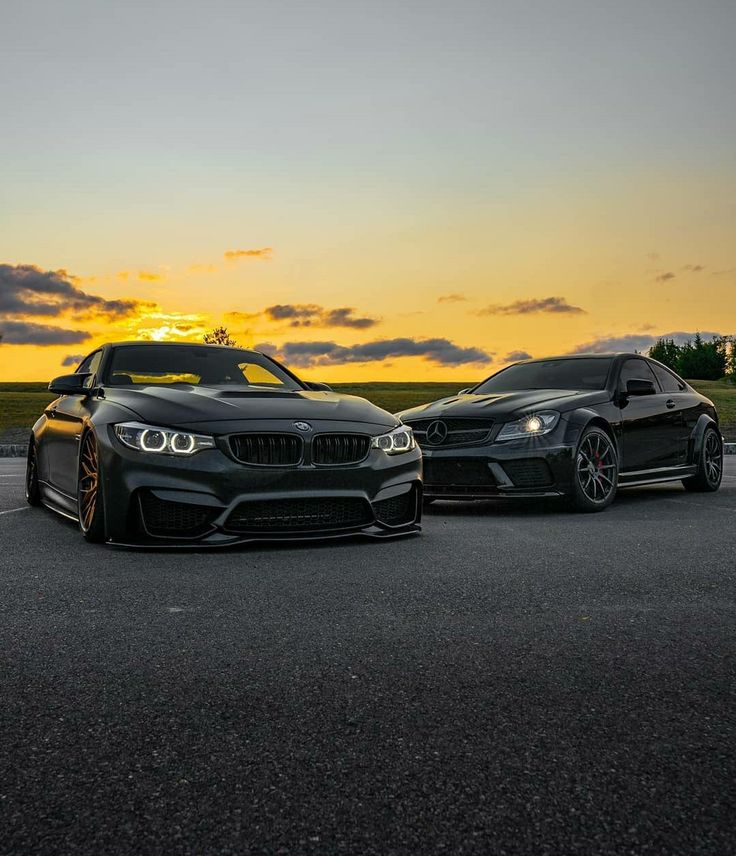
When comparing performance figures, the question of a faster car between BMW and Mercedes-Benz rarely has a simple answer. Both German marques represent the pinnacle of engineering, yet they approach the pursuit of speed with distinct philosophies. BMW often emphasizes agility and precision, tuning their chassis to feel like an extension of the driver's intentions. Mercedes-Benz, conversely, frequently focuses on brute force and technological dominance, layering immense power over a cushion of comfort. The reality is that the title of "faster" shifts depending on the specific models, generations, and metrics being evaluated, from quarter-mile blasts to track lap times.
Defining the Core Philosophy: Sport Sedan vs. Grand Tourer
The debate inherently compares different automotive categories, which muddies the waters significantly. BMW’s flagship M5 and M6 Gran Coupe are built on a sporting sedan platform, designed for high-speed merging and dynamic cornering on public roads and the track. These are purpose-built performance machines. Mercedes-Benz, while offering the AMG variants like the C63 and E63, often positions its top-tier S-Class and GT models as grand tourers. The priority for a GT is long-distance comfort and effortless speed, where brute acceleration is just one component of a luxurious experience. Therefore, a direct comparison must first acknowledge that a BMW M5 is engineered to be a sharper weapon, while a Mercedes-AMG GT63 S is built to dominate a straight line and then cruise in supreme comfort.
The BMW Advantage: Handling and Balance
If the circuit is the benchmark, the BMW M5 often holds a significant edge due to its chassis engineering. The current generation features an available adaptive air suspension and rear-axle steering that makes the car feel remarkably agile for its size. Power is delivered to all four wheels, but the steering is precise, and the chassis balance is weighted to encourage fast cornering. This creates a sensation of high grip, allowing the driver to carry more speed through turns. The driving dynamics feel organic and connected, making the BMW the faster choice for a track day where lap times are carved through a sequence of corners rather than straight-line acceleration.


The Mercedes-Benz Counter: Power and Refinement
Mercedes-AMG tends to win the straight-line duel, primarily through an abundance of brute force. Models like the AMG GT Black Series or the top-tier S-Class AMG variants utilize massive twin-turbocharged engines that produce staggering horsepower figures, often exceeding 700 hp. This translates to terrifying acceleration off the line, where the Mercedes can shove you back into the seat with immense force. Furthermore, Mercedes prioritizes high-speed stability and refinement; the cabin remains eerily quiet, and the ride is smoother, which allows the car to maintain its composure when flattening out on a highway or drag strip. For a quarter-mile race, the Benz often crosses the line first simply due to its ability to sustain higher top speeds with less effort.
Critical Comparison: Specific Model Showdown
To illustrate the differences, let’s examine a hypothetical race between a BMW M5 Competition and a Mercedes-AMG E 63 S 4MATIC+. In a rolling start, the Mercedes-AMG E63 will likely surge ahead, utilizing its massive torque curve to launch forward. The BMW, while slightly slower off the mark, will begin to reel it in due to superior mid-range power delivery and handling. On a twisty mountain road, the BMW M5 will consistently achieve faster speeds through the turns, potentially resulting in a lower overall race time if the route contains numerous corners. On a long, flat highway straight, the Mercedes will establish a gap and finish the sprint with ease, showcasing the advantage of supreme power and aerodynamic efficiency at high velocities.


| Feature | BMW M5 / M6 | Mercedes-AMG E63 / GT63 |
|---|---|---|
| Core Strength | Handling, Balance, Agility | Power, Refinement, Top Speed |
| Acceleration (0-60 mph) | Competitive (approx. 3.0-3.2 sec) | Slightly Faster (approx. 2.9-3.1 sec) |
| Track Lap Time | Often Faster (due to chassis balance) | Competitive (slower in tight corners) |
| Driving Philosophy | Sport-Sedan Precision | Grand Tourer Power |
The Verdict: It Depends on the Definition of "Faster"
Declaring a definitive winner in the faster car between BMW and Mercedes is impossible without specifying the model and the environment. For enthusiasts who measure speed by the thrill of navigating a winding road at high speed, the BMW is the undisputed champion. The connection between driver and machine is immediate and exhilarating. For those who define speed as the ability to dominate a straight line or traverse vast distances at maximum velocity with effortless power, the Mercedes-Benz AMG division takes the crown. Ultimately, the faster car is the one that aligns with your personal definition of performance—whether that is the razor-sharp handling of a Bavarian sport sedan or the earth-quaking power of a Stuttgart rocket.
Consider the Entire Experience
Beyond the stopwatch, the "faster" car is the one that delivers the speed reliably and enjoyably. A BMW M5 might be faster around a track, but if the suspension is too firm for your daily commute, it becomes less practical. A Mercedes-AMG might be slower through a series of hairpins, but its luxurious tech and effortless cruise control make high-speed travel less fatiguing. The evolution of both brands continues to blur the lines, as electrification and advanced computer systems enhance both performance and comfort. The true answer to which is faster lies not in the badge on the hood, but in how the driver intends to use the incredible power sitting beneath the hood.


Related Articles
BMW vs Mercedes-Benz: Which Luxury Brand Wins?
When comparing two of the most prestigious names in the automotive world, the question “is BMW better than Mercedes-Benz” rarely has a simple yes or no answer...

Tesla vs BMW EV Charger Showdown: Which Wins the Race?
Understanding the evolving landscape of electric vehicle charging is essential for any EV owner, and comparing specific solutions like the Tesla and BMW...

Mercedes Benz vs BMW: Which Luxury Car Wins?
Choosing between a Mercedes-Benz and a BMW is less about finding a definitive winner and more about identifying which philosophy aligns with your driving...

Difference Between 320 and 520 BMW: Which Sedan Wins?
Choosing between a 320 and a 520 BMW often presents enthusiasts with a classic dilemma of sport dynamics versus everyday comfort. Understanding the distinct...

BMW vs Lamborghini: Which Ultra Car is Faster?
When comparing which car is faster between BMW and Lamborghini, the answer often hinges on the specific models being considered. While BMW produces a wide...

BMW 5 Series vs Mercedes-Benz E Class: Which Luxury Sedan Wins?
For buyers navigating the premium sedan segment, the comparison between the BMW 5 Series and the Mercedes-Benz E Class is almost unavoidable. These two...