Toyota MR2 Group B Rally Car: The Ultimate Guide
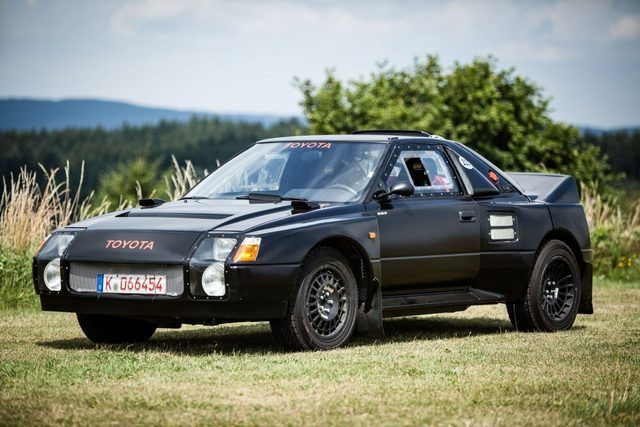
The Toyota MR2 Group B rally car represents a fascinating, albeit brief, moment where Toyota’s engineering brilliance collided with the raw, unbridled power of Group B rallying. This is not the Toyota MR2 sports car known for its nimble handling and mid-engine layout; instead, this is a story of a purpose-built, wide-body monster that was designed to devour gravel and stage after stage. Born from the ashes of the previous Celica-based rally platforms, the MR2 Group B project was Toyota’s audacious entry into the most competitive and destructive era of rally history.
The Birth of a Legend: Context and Development
To understand the MR2 Group B, one must first appreciate the chaotic zenith of the World Rally Championship in the early 1980s. Group B rules, introduced in 1982, allowed for extraordinary freedom, with manufacturers essentially given a blank check to create road-going homologation specials of immense power. Toyota, under the stewardship of the legendary Ove Andersson and his Team Toyota Europe, saw an opportunity. The project aimed to create a car that was not just competitive, but dominant, leveraging advanced technology and aggressive design. The MR2 name, a mystery in rally circles, was chosen to disassociate it from the popular sports car and signal a new, formidable machine.
Engineering Marvels and Mechanical Specifications
Under the hood, the MR2 Group B was a radical departure. It featured a turbocharged 1.8-liter inline-four engine, derived from Toyota's Group 2 Celica platform but extensively reworked for the extreme pressures of rallying. This powerplant was mated to a sophisticated four-wheel-drive system, a rarity at the time for a Toyota rally car. The chassis was a spaceframe design, wrapped in a lightweight yet rigid carbon fiber and kevlar composite body. This construction was not just for show; it was essential for handling the immense power and withstanding the brutal punishment of rally stages. The car was designed with a low center of gravity and wide track, giving it exceptional stability on high-speed corners, a critical advantage on tarmac stages.


The drivetrain was equally advanced, featuring a Torsen center differential that provided near-perfect torque distribution between the front and rear wheels. This system allowed the MR2 to deliver power to the ground efficiently, regardless of surface conditions. Brakes were oversized discs, capable of enduring the extreme heat generated by high-speed descents, while the suspension geometry was finely tuned for maximum grip and control. This combination of power, grip, and control was what made the MR2 Group B a technical tour de force, a car built for the limits of physics.
A Campaign Cut Short: The Tragedy of Group B
The MR2 Group B’s competitive career was, tragically, as short as it was spectacular. The car made its debut at the 1985 Monte Carlo Rally, driven by the formidable Henri Toivonen and his co-driver Sergio Cresto. Initial results were promising, with the car showing immense speed and potential. However, disaster struck at the Tour de Corse just two months later. On May 2, 1986, Toivonen’s MR2 crashed violently on a tight mountain stage, plunging off a cliff and erupting into flames. The crash, which also claimed the lives of Toivonen and Cresto, was the catalyst for a series of catastrophic events that led to the immediate cancellation of the Group B category.


The timing of the accident was catastrophic for Toyota. The MR2, with its promise and unfulfilled potential, was abruptly retired. The political and safety fallout from the Tour de Corse was immense, and governing bodies moved swiftly to ban the class. Consequently, the MR2 Group B never had the opportunity to prove its mettle on a full season of rallies. This abrupt end cemented its status not as a champion, but as a brilliant, unfinished idea—a car that arrived too late for the very rules that created it.
Legacy and Collector Value
Despite its brief and tragic history, the legacy of the Toyota MR2 Group B is immense. It is remembered as one of the most advanced and ambitious rally cars of its era. The car’s innovative four-wheel-drive system and composite construction were years ahead of their time, influencing future Toyota rally and production vehicle designs. For rally enthusiasts, the MR2 Group B is a symbol of a bygone era—a time when manufacturers pushed the boundaries of motorsport with terrifying freedom. Its story is a compelling narrative of ambition, technological prowess, and the high cost of progress.
In the collector car market, original Toyota MR2 Group B parts and memorabilia are exceptionally rare and valuable. Surviving cars, of which only a handful are believed to exist, are not just cars; they are historical artifacts. They represent the pinnacle of what Group B could have been and serve as a poignant reminder of a sport that dared to be dangerous. The MR2’s story continues to captivate engineers and fans alike, a testament to a piece of automotive history that was both brilliant and heartbreaking.




Related Articles

Toyota Celica GT Four Group A: The Ultimate Rally Beast Guide
The Toyota Celica GT-Four Group A represents the pinnacle of rally-bred, turbocharged Japanese performance from the late 1980s and early 1990s. Born from the...

Toyota Celica GT Rally Car: The Ultimate Guide to Specs, Performance & History
The Toyota Celica GT Rallye represents a pinnacle of rally engineering and a beloved icon of Group B motorsport. Emerging from the streets of Japan to dominate...

Toyota Rally Hatchback: The Ultimate Guide to Grip and Agility
The Toyota rally hatchback represents a fascinating intersection of everyday practicality and raw motorsport pedigree. For decades, enthusiasts have looked to...

The Ultimate Guide to the Group B BMW M1: Legends of the Rally Road
The Group B BMW M1 represents a fascinating and often misunderstood chapter in automotive history, a machine born from the volatile politics of 1980s...

Dirt Rally 2.0 Toyota GR Yaris: Ultimate Off-Road Tuning Guide
The integration of the Toyota GR Yaris into Dirt Rally 2.0 represents a significant milestone for rally simulation enthusiasts. This collaboration brings one...

Ultimate Rally Toyota Celica Guide: Turbocharged Specs, Videos & 2024 Shocks
The Toyota Celica holds a legendary status in the automotive world, and for enthusiasts within the rally community, its name resonates with a distinct legacy...