Toyota Production System Chart: A Visual Guide to Lean Manufacturing Efficiency
The Toyota Production System (TPS) represents one of the most influential manufacturing philosophies in modern industrial history. This integrated socio-technical framework underpins Toyota's legendary efficiency and quality, serving as the bedrock for what we now recognize as Lean manufacturing worldwide. Understanding the TPS chart is essential for any organization seeking to emulate this success, as it visually maps the system's core principles, processes, and cultural elements that drive relentless improvement.
Foundational Pillars of the System
At its heart, the Toyota Production System chart is built upon two central pillars: Just-in-Time (JIT) and Jidoka. JIT focuses on producing only what is needed, when it is needed, and in the amount needed, thereby minimizing inventory waste and exposing problems immediately. Jidoka, often translated as "automation with a human touch," empowers equipment and workers to stop the production line when an abnormality is detected, ensuring quality is built in rather than inspected in. These pillars work in concert to create a resilient and responsive operation.
The Principle of Kaizen
Another critical component visualized within the TPS framework is the principle of Kaizen, or continuous improvement. This is not merely a program but a pervasive culture where every employee, from the line worker to the executive, is encouraged to identify inefficiencies and implement small, incremental improvements daily. The chart illustrates how Kaizen flows through standardized work, creating a dynamic cycle of assessment and refinement that propels the entire organization toward operational excellence.


Visual Mapping and Workflow
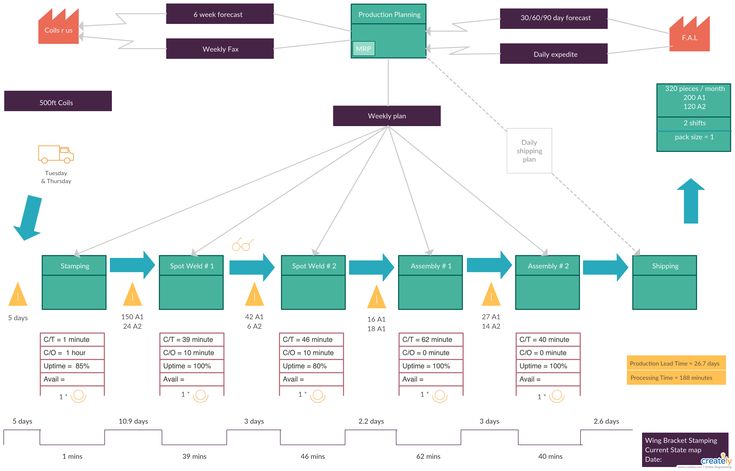
A standard Toyota Production System chart often maps the value stream, providing a clear visual representation of every step required to deliver a product or service. This mapping distinguishes between value-added activities, non-value-added but necessary processes (like quality checks), and pure waste (such as excess motion or waiting). By making this flow visible, TPS empowers teams to target the latter two categories for elimination, thereby enhancing overall efficiency and reducing lead times significantly.
| TPS Pillar | Core Concept | Primary Goal |
|---|---|---|
| Just-in-Time (JIT) | Produce only what is needed, when it is needed. | Eliminate waste, reduce inventory. |
| Jidoka | Quality built into the process; automation with control. | Defect prevention, immediate problem detection. |
| Kaizen | Continuous, incremental improvement by all employees. | Cultural evolution and sustained innovation. |
Respect for People
Frequently overlooked in external interpretations, the Toyota Production System chart fundamentally relies on the principle of respect for people. This involves empowering employees, providing them with training and stability, and fostering an environment where they can take ownership of their work. Technical systems are only as effective as the human element that supports them; TPS recognizes that sustainable success is achieved through trust, collaboration, and genuine care for the workforce.


Implementing a TPS-inspired model requires a long-term commitment to shifting organizational culture. It moves away from a command-and-control hierarchy toward a collaborative problem-solving environment where data and visual management tools are paramount. Leaders must focus on coaching rather than directing, guiding their teams through the structured yet adaptive processes that define the Toyota way.
Ultimately, the Toyota Production System chart is more than a diagram; it is a strategic blueprint for operational integrity. Organizations that study and adapt its principles find they can achieve superior quality, faster delivery, and enhanced employee engagement. By embracing the philosophy behind the visual framework, businesses can transform their operations and build a sustainable competitive advantage rooted in efficiency and innovation.




Related Articles

Toyota Production System House Diagram: Visual Guide to Lean Manufacturing
The Toyota Production System House diagram serves as a foundational blueprint for understanding the operational excellence that transformed the global...
Toyota Production System & Deming: The Ultimate Guide to Lean Manufacturing Success
Examining the Toyota Production System Deming connection reveals the foundational statistical principles that enabled a revolutionary approach to...
Toyota Production System Explained: Master Lean Manufacturing Efficiency
At its core, the Toyota Production System (TPS) represents a radical shift in how organizations approach manufacturing. More than a set of tools, it is a...

The Best Book on Toyota Production System: Master Lean Manufacturing Efficiency
For professionals and enthusiasts seeking to understand the foundational principles of operational excellence, the journey often begins with the Toyota...

Toyota Production System PDF Free Download: Lean Manufacturing Guide
For professionals in manufacturing, logistics, and operations management, understanding the Toyota Production System (TPS) is often considered a prerequisite...

Toyota Production System History: The Definitive Guide to Lean Manufacturing Origins
Long before the world recognized it as a benchmark for operational excellence, the Toyota Production System emerged from the specific challenges faced by a...