Hyundai Kona Dashboard Symbols: Complete Guide to Meanings & Warning Lights
Understanding the dashboard symbols of your Hyundai Kona is an essential part of responsible vehicle ownership. The warning lights and indicators on your instrument cluster act as the car’s primary communication system, alerting you to everything from a low fuel level to a critical safety malfunction. Ignoring these signals can lead to reduced vehicle performance, expensive repairs, or even dangerous driving situations. This guide provides a detailed breakdown of the most common Hyundai Kona dashboard warning lights, helping you respond quickly and correctly.
Hyundai Kona Dashboard Symbol Overview
The Hyundai Kona features a modern dashboard designed for clarity, utilizing standardized ISO icons alongside brand-specific indicators. These symbols are generally grouped into three categories: warnings, cautions, and informational messages. Warning symbols typically appear in red and require immediate attention, while yellow or orange symbols indicate a system check is needed. White or green symbols usually confirm that a specific system, such as the headlights or cruise control, is currently active. Familiarizing yourself with the layout of your specific model year is the first step toward ensuring your safety and the longevity of your vehicle.
Critical Warning Lights (Red)
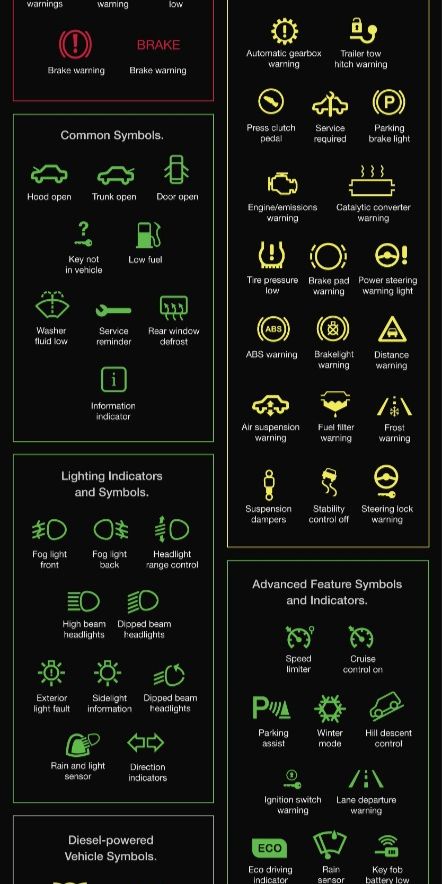
Red warning lights demand immediate action. If you see one of these while driving, it is usually safest to pull over to the side of the road as soon as possible. The most critical symbols include the oil pressure light, which looks like an oil can and indicates that your engine is not being lubricated properly; the engine temperature warning, often depicted as a thermometer in water, signaling an overheating engine; and the brake system warning, which appears as a circle with an exclamation mark, indicating a potential loss of braking power. Driving with any of these lights illuminated risks catastrophic engine failure or a complete brake failure.


Important System Alerts (Orange and Yellow)
Orange and yellow warning lights signal that a system requires service, but the vehicle is likely still safe to drive for a short period. The Check Engine Light is the most common of these, represented by the outline of a car engine. This light can mean anything from a loose gas cap to a serious misfire. The tire pressure warning light, showing a horseshoe shape with an exclamation mark, indicates that one or more tires are significantly underinflated, which can affect handling and fuel economy. Additionally, the stability control light, often depicted as a car with wavy lines behind it, alerts you that the traction control system is actively working or has been turned off.
Safety Feature Indicators
Hyundai places a strong emphasis on safety, and the Kona’s dashboard reflects this with specific symbols for driver-assistance technologies. The Airbag warning light, which looks like a person sitting in a chair with a circle in front of them, indicates a fault in the supplemental restraint system. The Anti-lock Braking System (ABS) light, showing a circle with "ABS" inside, alerts you that the emergency braking aid is disabled. Furthermore, the Blind-Spot Collision Warning light, which resembles a car with a curving arrow, lets you know when the system is actively monitoring your blind zones for potential lane changes.


Informational and Active System Lights
Not all lights on the dashboard are warnings; many are simply confirmations that a feature is currently engaged. The High Beams symbol, a light pointing to the right, lets you know that your high-beam headlights are active. The Front Fog Light symbol, which looks like a triangle with a wavy line, indicates that the fog lamps are turned on. Similarly, the Cruise Control icon, often a stylized speedometer, confirms that the set speed is active. These green or white lights are purely informational and do not require any corrective action.
Battery and Charging System
The battery warning light takes the shape of a battery with positive and negative terminals. If this light illuminates while driving, it signifies that the charging system is not functioning correctly. This could be due to a failing alternator, a loose serpentine belt, or a dying battery. Unlike the red oil or temperature warnings, you might be able to drive to a service station, but you should do so cautiously and turn off non-essential electrical devices (like the radio or AC) to prevent the engine from stalling. Ignoring this light will eventually leave you stranded with a dead battery.
Responding to Dashboard Alerts
When a warning light appears, your first step should always be to assess the vehicle's performance. Is it pulling to one side? Is there smoke or steam? Is the engine making unusual noises? If the car is driving abnormally, pull over immediately and turn off the engine. For less severe alerts, such as the tire pressure light, check your vehicle's manual for the recommended tire pressure and inspect the tires visually if safe to do so. Regardless of the severity, any persistent warning light should be checked by a certified Hyundai technician as soon as possible to diagnose the underlying issue and prevent minor problems from escalating into major repairs.


Related Articles

Toyota Aqua Dashboard Symbols: Complete Guide to Warning Lights & Meanings
Understanding the dashboard symbols of your Toyota Aqua is more than just deciphering lights; it is about maintaining the safety, efficiency, and longevity of...

Toyota Estima Dashboard Symbols: Complete Guide to Meanings & Warning Lights
Understanding the language of your Toyota Estima’s dashboard is fundamental to responsible vehicle ownership. The intricate network of symbols and indicators...
Toyota Mark X Dashboard Warning Lights: Complete Guide to Symbols & Meanings
Understanding the language of your Toyota Mark X is essential for maintaining its performance and safety, and the dashboard warning lights serve as the...
Toyota Dashboard Symbols Decoded: Complete Guide to Warning Lights
Understanding the dashboard warning toyota dashboard symbols is essential for every owner, as these indicators provide real-time insight into the vehicle's...
2017 Toyota Corolla Dashboard Symbols: Complete Guide to Warning Lights
Driving a 2017 Toyota Corolla provides a reliable and efficient experience, but understanding the dashboard symbols is crucial for maintaining that...

2025 Hyundai Elantra Dashboard Symbols: Complete Guide & Meanings
Driving a 2025 Hyundai Elantra is an exercise in modern automotive efficiency, blending a sleek design with a tech-forward cabin. Behind the steering wheel...